Buying a Modular Home in Brisbane? Check the Site Before You Commit
A catalogue can show you the home. It cannot establish whether that home suits your land.
Imagine finding a modular home that seems to tick every box. The layout works. The finishes
look appealing. The advertised price feels achievable.
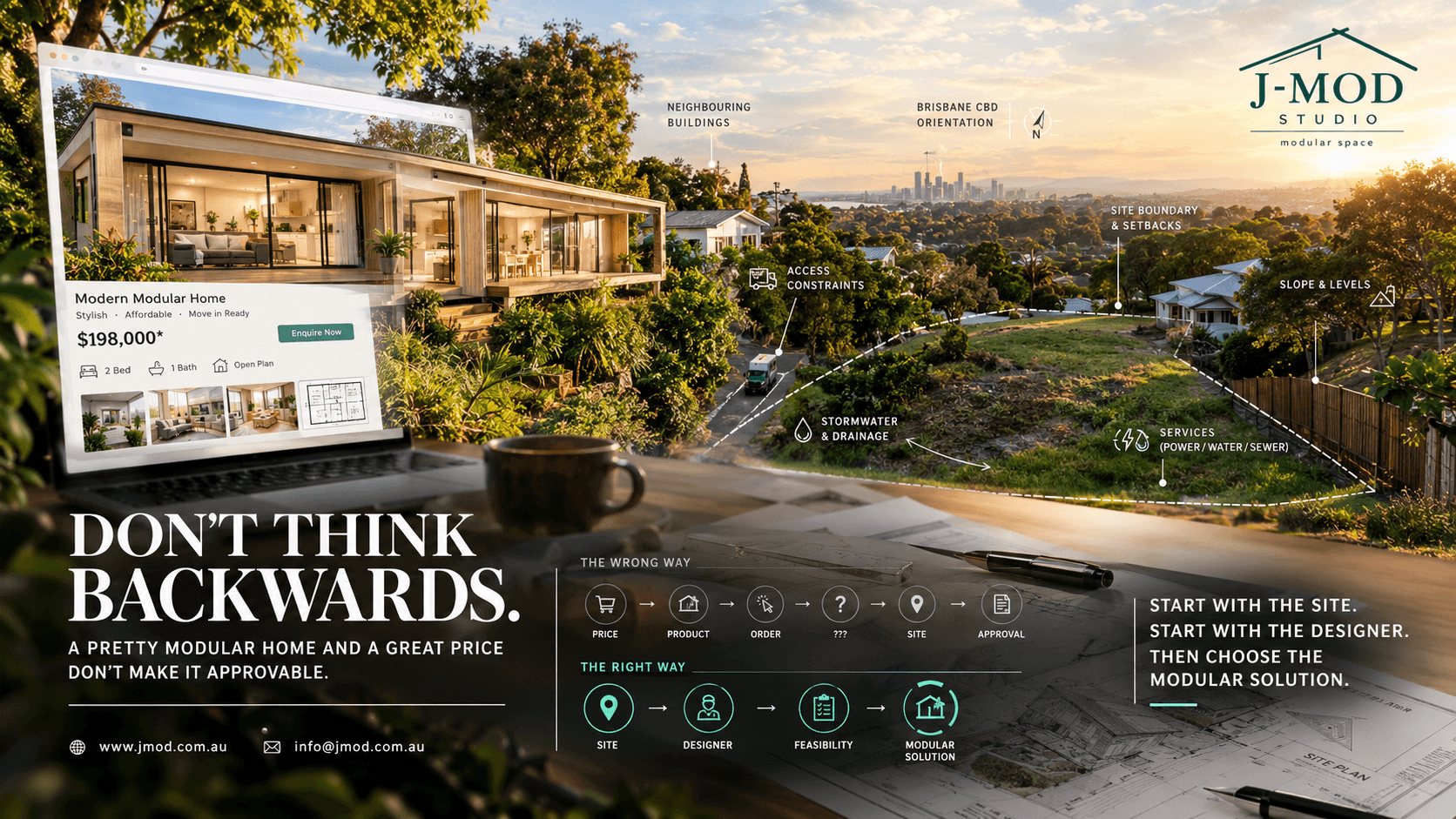
The risk of buying the home first
A catalogue is a useful starting point for ideas. Trouble begins when an attractive image becomes a commitment before the practical questions have answers.
For existing landowners, the task is to establish what their property can accommodate. For buyers still searching, it is to test whether a prospective block supports the home and lifestyle they want before committing to the land.
Your block is part of the design
Power, water, sewer and stormwater connections need to be understood alongside the
building. These are parts of the project, even when they sit outside the supplier’s advertised
package.
A site review helps identify which questions need specialist advice before the design becomes fixed.
Factory manufacture does not establish approval
Brisbane City Council distinguishes planning approval from building approval. Some new houses do not require a separate planning application when the applicable accepted-
development requirements are met. Houses still require building approval, organised through a licensed building certifier. Brisbane City Council
The QBCC’s guidance on manufactured dwellings also highlights compliance requirements, supporting information and site-specific considerations. It advises checking the regulated
criteria before ordering and installing. qbcc.qld.gov.au
A building designer develops and documents the proposal; the appointed certifier assesses building compliance. Engineers, town planners and other specialists contribute where the project requires their expertise. Engaging a designer does not guarantee approval, but it helps bring the relevant questions into the design process early.
A better sequence for buying a modular home
Start with the site and your brief. Establish what you want to build, how you want to live and what is known about the property.
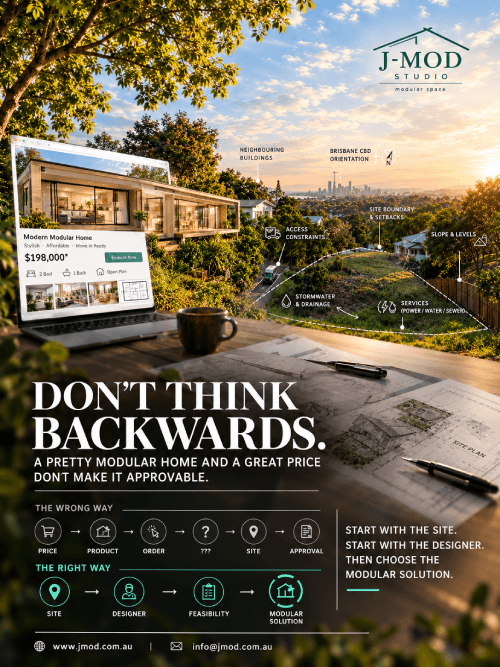
Don’t think backwards
Modular construction can be a suitable way to deliver a home. Its suitability depends on how well the product, design and site work together.
Before asking, “Which home should I order?”, ask, “What can work on this property?”
For an initial site and design discussion, contact J-MOD Studio at info@jmod.com.au or visit www.jmod.com.au.